
Before product-dependent filming begins, compare what the creator received with the exact product and components the agreed shot needs. Record any mismatch and decide who will clarify it or arrange a replacement. A parcel marked delivered confirms a shipping event; it does not by itself confirm that the right sample is ready to film.
Describe what the planned shot actually needs
Start with the agreed product action, then identify the sample needed to show it honestly. Specify the model or variant, color, included parts and any instructions relevant to that action. A general product name may not distinguish two versions that look similar but include different components.
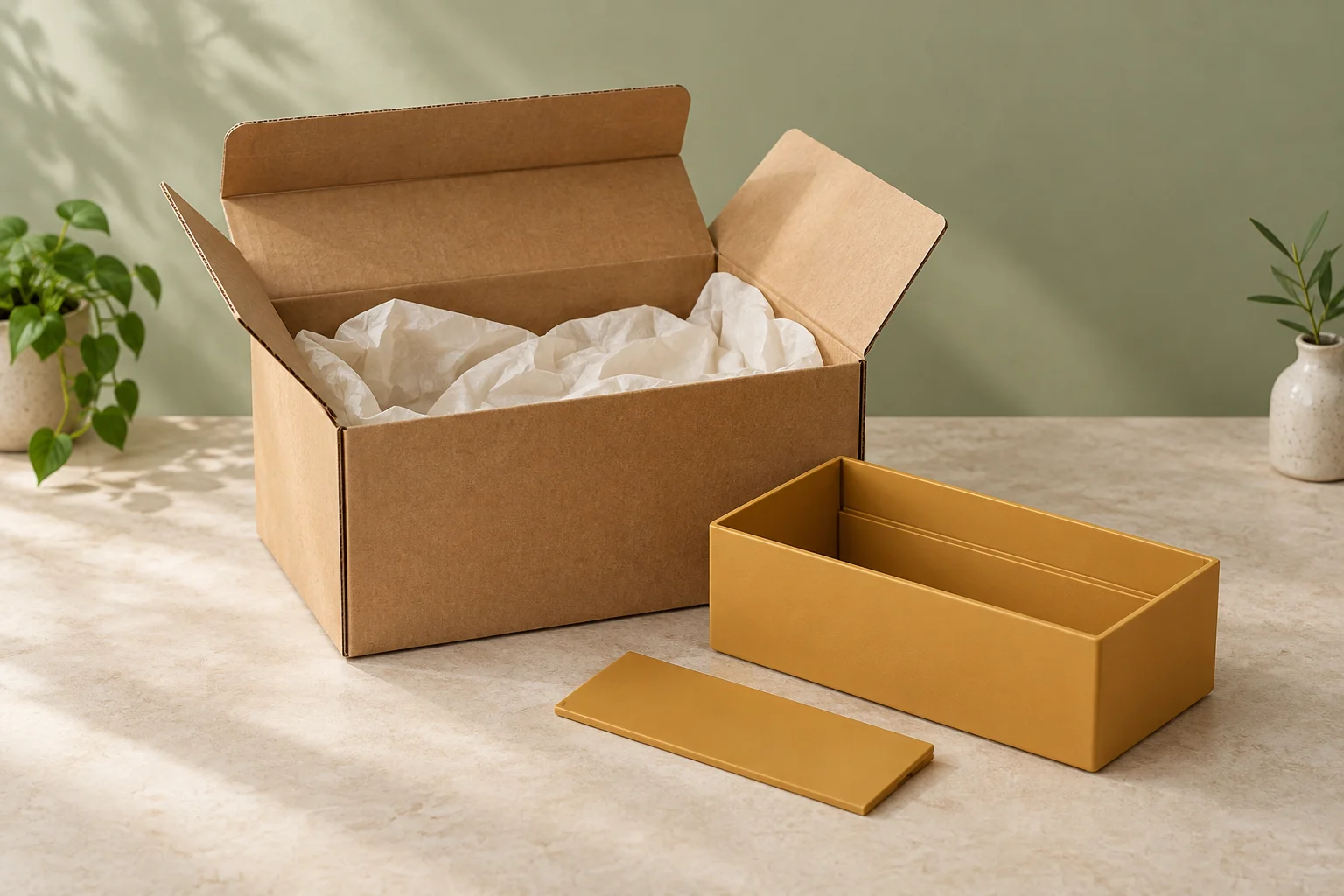
For this guide’s fictional example, a brand wants a close view of placing a removable divider into a matte ochre desktop organizer. The expected sample is that organizer and its matching divider. This is an invented teaching example, not a performed product test or customer shipment. It makes no claim about strength, capacity or ease of use.
- Confirm the exact variant and the components supplied for filming, with a reference image if it helps identify them.
- Separate parts included in the product from styling props supplied only for the shoot. Agree how that difference will remain clear in the content.
- Share relevant manufacturer instructions and resolve questions about the intended handling before filming. Do not invent a demonstration that contradicts those instructions.
- Agree what should happen to the sample afterward, including any return arrangements and responsibilities. Do not assume that receiving it determines ownership or that a return is automatically required.
Keep this record focused on the physical sample. The creative brief defines the content, while the production timeline records dates and dependencies. A new sample detail that changes the planned action should be reconciled with those documents.
Confirm delivery details privately and separate the statuses
Before dispatch, confirm the recipient’s current delivery details through an agreed private channel. Give the creator the shipment reference or tracking information when available, and distinguish an estimated arrival from a confirmed receipt. Avoid placing addresses, phone numbers or identifiable parcel labels in public examples or portfolio footage.
Insense’s brand product-delivery guidance recommends double-checking delivery details before shipment, notifying the creator when the product is sent and sharing the tracking link. These are documented steps for that service; they do not establish Stage shipping features or universal carrier rules. Follow the requirements that apply to the actual item and shipment.
Ask for a receipt check that identifies the item, its parts and any visible problem relevant to filming. A short description or focused photo can clarify a discrepancy without showing the shipping label. Keep “sent,” “received” and “ready for the agreed shot” as separate entries, each based on what has actually been confirmed.
If the product arrives damaged, report the condition and request instructions before using it. Insense’s creator shipment guidance explicitly asks creators to notify the brand of poor condition and seek further instructions. Do not ask someone to test a damaged item to prove that it works; this communication check is not a safety assessment.
Resolve the mismatch against the shot, not the tracking status
The rows below are alternative hypothetical receipts of the organizer sample. They are not a sequence of real observations. Each decision concerns the agreed divider demonstration; it does not certify the whole product or approve the eventual video.
Fictional organizer sample: expected, received and next decision
Scroll sideways to see all columns.
| Expected for the shot | Possible receipt | Decision to confirm |
|---|---|---|
| Ochre organizer and its matching divider | Correct color and parts are present; no relevant visible issue is reported. | Confirm the instructions and other prerequisites, then agree that this sample is ready for the planned action. |
| The specified ochre variant | A grey organizer arrives with a divider. | Pause the variant-specific shot. The brand confirms a replacement or an explicit change of brief; do not present grey as ochre. |
| A divider to show being inserted | The ochre organizer arrives without the divider. | Hold the divider demonstration. Ask the brand to supply the missing part or agree a different action; do not improvise a substitute and imply it is included. |
| An intact organizer for the agreed handling | A crack is reported in the received organizer. | Do not proceed with the planned handling. Report the issue, request instructions and resolve the sample before confirming filming. |
Suppose the divider is missing. “Delivered yesterday” does not answer whether the planned action is possible. A useful message is: “The ochre organizer arrived, but the divider is absent from the received parts. The agreed shot shows inserting it. Please confirm whether you will send the part or propose a revised action.” That message identifies the consequence without assuming who is at fault or what must be free.
If the brand proposes showing the empty organizer instead, both parties should agree the revised content and any effect on scope or timing. If the part is sent, check that it is the correct part when received and reconfirm the creator’s availability. Neither a proposed change nor a replacement dispatch is itself permission to treat the original shot as completed.
Keep the actual receipt and next action in one note
Product sample handover record
Assignment and agreed shot:
Expected model/variant/color:
Expected components; separate styling props:
Relevant instructions and open handling questions:
Delivery contact confirmed privately on:
Shipment reference and estimated arrival, if available:
Actual receipt confirmed by / date:
Item and components received:
Visible condition or mismatch, with a private reference if useful:
Effect on the agreed shot:
Decision: ready for this action / awaiting clarification / awaiting replacement
Who will take the next action and when to check back:
Any agreed brief change and reconfirmed timing:
Agreed arrangement for the sample after filming:
Complete receipt fields after the item arrives. Leave unknowns visible rather than turning a tracking update into a completed inspection. If a detail changes, retain enough context to show which variant and action were ultimately agreed.
Once the sample is ready, move to the creator’s capture plan and the agreed production schedule. Reviewing the delivered video remains a later decision. A clear handover record helps the parties communicate about the same physical item; it does not promise a flawless shoot, a particular turnaround or campaign results.
How this fits UGC Stage
UGC Stage is an application in development connecting brands and UGC creators. Its planned collaboration workflow keeps conversations, references, files and feedback with the project. When available, that context can help both parties refer to the agreed sample and later clarifications. The handover record here is a manual communication aid, not a promised shipping tracker, inspection tool or return service in Stage. Join the brand launch list to hear when the application becomes available.
Explore the applicationSources and notes
Practical guidance from the UGC Stage team. Examples are educational, not customer results or income guarantees.