

Use time-lapse for the repeated part of a product process, after deciding which action the viewer must see clearly. Record that essential action separately at normal speed. A short finished video does not show how long the real task took, and slowing an interval-captured file cannot reveal moments the camera did not record.
Choose what must remain visible
Write the viewer’s task in one sentence: for example, understand how the divider fits and see the tray after sorting. Repeatedly placing similar objects may be suitable for compression; the brief moment that explains the divider needs its own continuous recording.
Apple’s iPhone guide describes time-lapse as footage captured at selected intervals. In its Camera workflow, select Time-lapse and place the framed phone on a stable surface or tripod. This is guidance for that camera workflow, not a promise that every device offers the same controls.
Interval capture and speeding up an ordinary recording are different starting points. With interval capture, an important movement can occur between captured moments. Keep a separate normal-speed source when that movement matters. Do not promise to recover it later by stretching the time-lapse.
Example: sorting thread spools into a tray
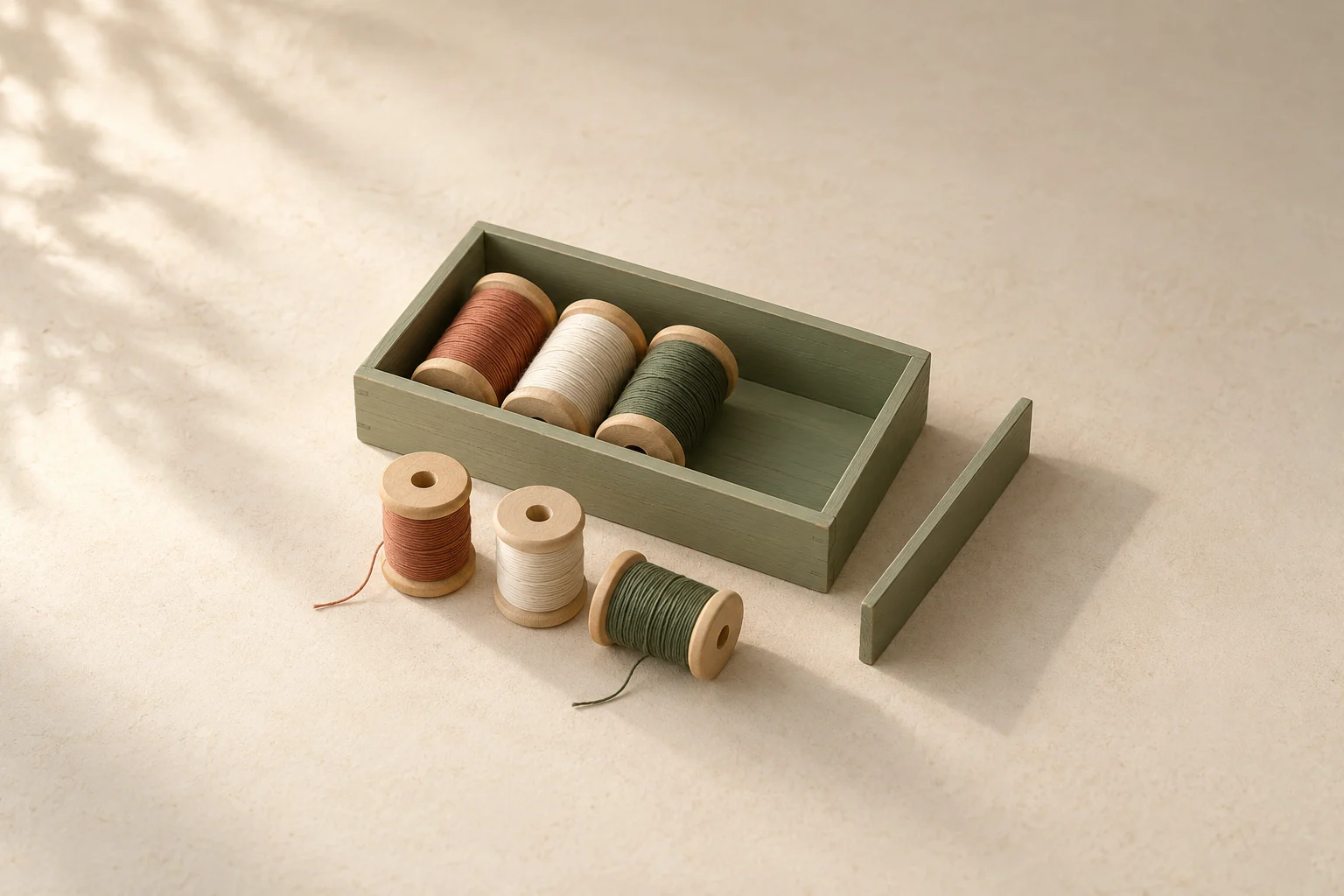
Imagine a tray with a removable divider and a group of thread spools. The table is a fictional filming plan, not a tested product demonstration. The generated cover illustrates the objects only; it does not establish how its pictured divider fits.
Original capture decisions for the fictional tray
| Part of the process | Capture choice | Check before leaving the setup |
|---|---|---|
| Inserting the divider into its intended position | Record the complete action separately at normal speed, with the contact point visible. | Can the viewer see where it goes and how it seats? If not, change the view and record again. |
| Repeatedly sorting spools after the divider is in place | Use time-lapse only for the repetition that adds no new instruction. | Is the progression understandable without implying that this is the real task speed? |
| The finished arrangement | Record a separate, steady view of the actual final state. | Can the viewer inspect the arrangement? Do not infer capacity, strength or fit beyond what the real product supports. |
Keep the start and finish consistent. If you change the divider position or move objects between takes, record the change in your plan and decide whether the edit needs an explanation. Do not combine different arrangements into an apparently uninterrupted product test.
Try the setup before the full sequence
Make a short trial using your actual camera and subject. Watch the saved result to check framing, visible progression and distracting light changes. Keep the camera support clear of the surface you repeatedly touch; inspect the image after a bump or interruption.
Choose settings from the controls available on your device and judge the saved result. There is no single interval or recording duration prescribed here. If a necessary step disappears, record it separately; if a long process cannot be repeated, plan the continuous coverage before starting.
In the edit, make the compressed section clear with wording such as “Time-lapse: sorting process.” Return to the separate normal-speed demonstration for the important action. Do not add an elapsed-time claim unless you have a reliable record of that actual run.
Keep a capture record and check the export
Time-lapse capture record What the viewer needs to understand: Repeated section selected for interval capture: Essential action recorded separately at normal speed: Source filenames and actual recording modes: Start and finish arrangement: Interruptions or changes between takes: How compressed time is identified: Export filename and remaining issue:
Play the exported file from beginning to end. Check that the explanation, essential action and finished state are all present. Ask whether a viewer could mistake the compressed section for proof of the product’s operating speed. If so, clarify the sequence before sharing it.
For a portfolio sample, describe the actual production choice: separating a repeated process from an instructional detail. Keep this fictional worksheet separate from evidence of your own work, and do not claim a recording or result you have not made.